For many families in Kerala, Onam is a time for new beginnings. For some, that new beginning may be the decision to finally start building a new home.
Once the construction plan is ready, one practical decision needs attention early: when should you buy the TMT bars?
Buying steel too early can create storage and handling issues, while ordering it at the last minute can delay reinforcement work. The right approach is to plan your TMT purchase around your construction schedule, structural drawings, and actual material requirements.
If you are planning to start house construction after Onam, this guide explains when to arrange your TMT bars, how to plan purchases around different construction stages, and what to consider before the steel reaches your site.
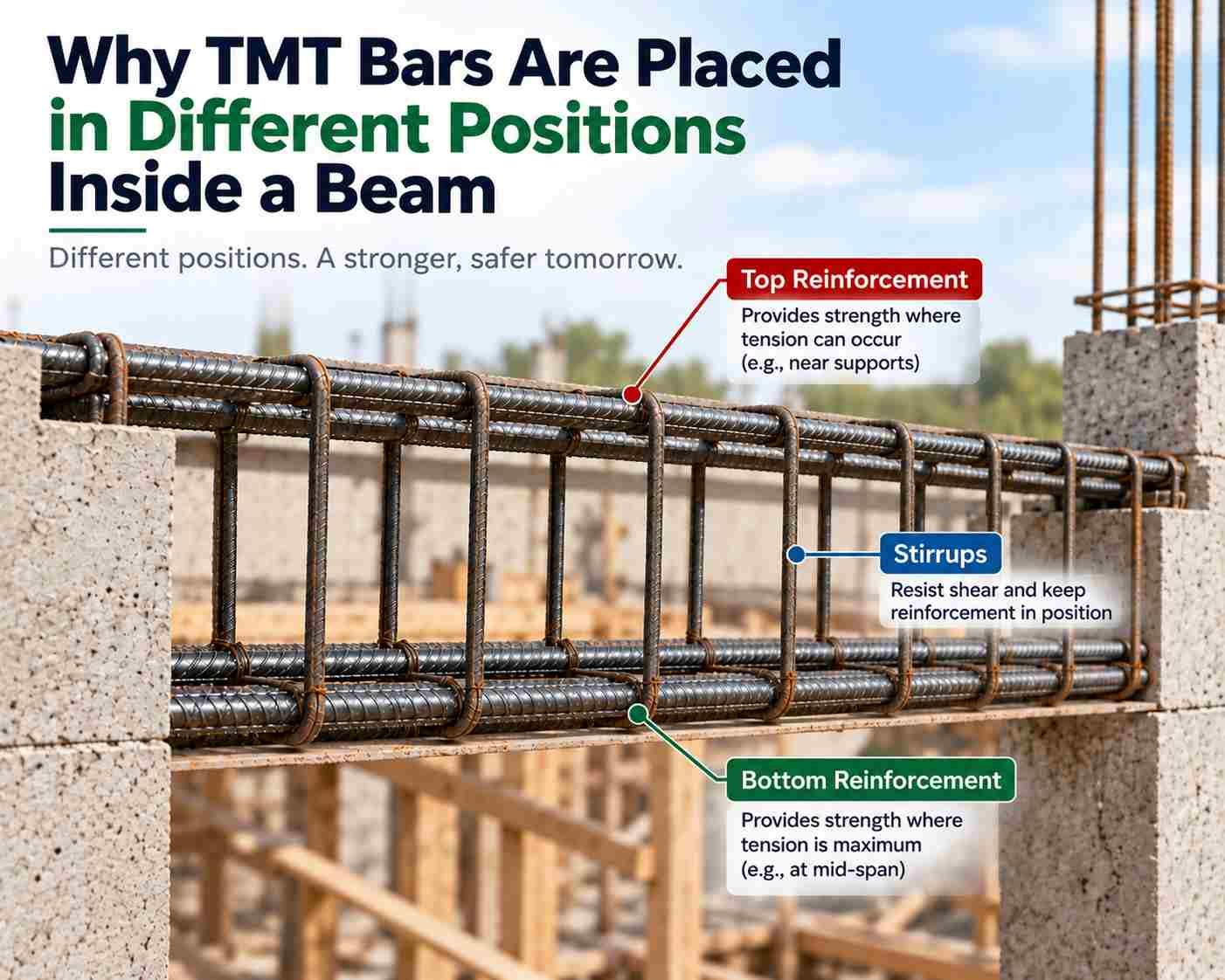
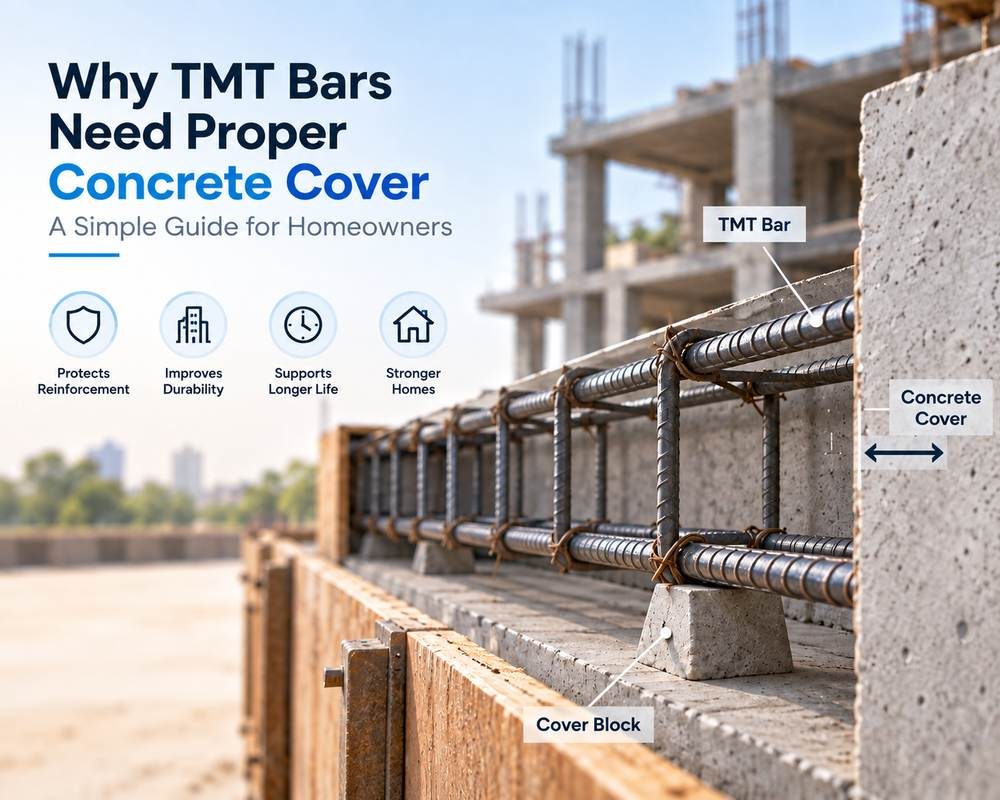
TMT bars are required at different stages of house construction. They may be needed for:
The entire steel requirement may therefore not be needed at the same time.
If you purchase all the steel months before it is required, you will need enough space to store it safely. If you wait until reinforcement work is about to begin, you may face delays if the required grade or diameter is not immediately available.
The goal is simple: have the required TMT bars available when they are needed without storing unnecessarily large quantities for a long period.
There is no single date that is right for every house.
The best time to purchase TMT bars depends on:
Once the structural design is finalized, discuss the steel requirement with your contractor and supplier.
If foundation work is scheduled first, you can plan the steel required for that stage. The requirements for columns, beams, and slabs can then be planned as the construction progresses.
Not necessarily.
Some homeowners prefer to purchase the entire requirement at the beginning, particularly when they are concerned about price changes or material availability.
However, buying everything at once means a large quantity of steel may remain at the site for a considerable period.
This requires:
If the construction schedule changes, the steel may also remain unused for longer than expected.
For many individual house projects, stage-wise procurement can be a practical option, provided it is properly coordinated with the construction schedule.
Before buying TMT bars, make sure you have the approved structural drawings.
The structural design determines details such as:
These details should form the basis of your steel purchase.
Avoid estimating your complete steel requirement simply from the built-up area of the house. Two houses with a similar floor area can require different quantities of reinforcement because their layouts, spans, loads, number of floors, and structural designs can differ.
A house is built in stages, and steel requirements change from one stage to another.
Planning these separately helps avoid confusion and unnecessary stock at the site.
It can be tempting to buy steel early because construction is about to start.
But if the structural design is still being finalized, you may not yet know:
Purchasing before these details are confirmed can result in unnecessary material or the wrong combination of bar sizes.
The better approach is to finalize the structural requirements first and then plan the purchase.
Also Read: 10 Mistakes Homeowners Make While Buying TMT Bars – And How to Avoid Them
Buying steel in advance is not necessarily a problem.
It can make sense when:
However, the longer steel remains at the site, the more important proper storage becomes.
A large stock should not simply be left exposed to rain and standing water.
Kerala’s humid climate and frequent rainfall make storage an important consideration.
TMT bars should preferably be stored:
Proper storage also makes it easier for workers to identify and use the correct reinforcement.
A small amount of surface rust does not automatically mean that a TMT bar cannot be used. However, deep corrosion, pitting, or significant surface damage should be assessed before the bar is incorporated into the structure.
Also Read: How to Store TMT Bars During Kerala Monsoon: A Practical Guide for Contractors and Homeowners
Steel prices can change, so homeowners may be tempted to delay a purchase hoping for a lower price or buy a large quantity when prices appear favourable.
But predicting future steel prices is difficult.
The decision should also consider:
Saving a small amount on the purchase price may not be worthwhile if the steel then remains stored at the site for several months.
It is better to make procurement decisions based on your actual construction requirements and schedule, rather than trying to predict short-term price movements.
Yes.
The TMT grade should be decided by the structural engineer based on the requirements of your building.
Different grades have different mechanical properties, and the grade should not be changed simply because another grade is cheaper or more readily available.
For example, you should not replace the grade specified in the structural drawing without discussing the change with the structural engineer.
The same applies to bar diameter and reinforcement quantity.
Also Read: Why Your Contractor Recommends Specific TMT Bar Grades: The Reasoning Behind Every Grade Decision
There is no fixed amount of steel that applies to every house.
The required quantity depends on factors such as:
A rough per-square-foot estimate may be useful during early budgeting, but it should not replace the quantity calculated from the structural design.
For actual procurement, use the reinforcement schedule, bar bending schedule, or quantity estimate prepared for your project.
Before ordering steel, have a simple discussion with your contractor about the construction sequence.
Ask:
This small amount of planning can prevent unnecessary last-minute purchases.
If you are starting construction after Onam, you can follow a simple process:
This approach provides a steady supply of reinforcement without unnecessarily filling the construction site with steel.
For many families, starting a new home after Onam can mark an important new chapter. But good construction begins with planning, not just with the first day of work.
TMT steel procurement should be part of that planning.
Instead of buying the entire steel requirement without considering when it will be used, coordinate your purchase with the structural drawings, construction schedule, contractor, and supplier.
Make sure you know the required grade and diameters, arrange delivery at the appropriate stage, and provide proper storage at the site.
Most importantly, buy according to what your structure requires rather than simply buying based on price or assumptions.
The steel hidden inside your concrete will remain part of your home for decades. Planning its purchase carefully is a small but important step toward building a strong and durable home.